Small Acts of Kindness That Can Change Someone’s Day
Small acts of kindness can change someone’s day. Discover simple, research-backed ways to spread kindness and make a lasting impact.
BLOG
Javed Niamat
12/17/20253 min read

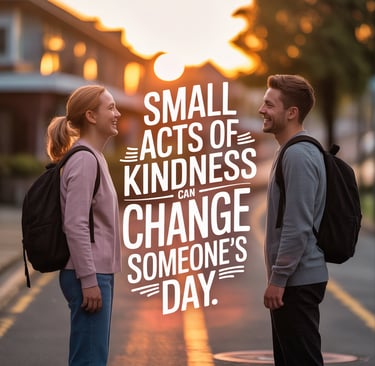
Small Acts of Kindness That Can Change Someone’s Day
Introduction: The Quiet Power of Kindness
In a world that often feels hurried and heavy, small acts of kindness can feel like rays of sunlight breaking through the clouds. They don’t require wealth, status, or special skills—just a willing heart and a moment of awareness. Research consistently shows that kindness improves mental health, strengthens relationships, and even boosts physical well-being for both the giver and the receiver. Yet beyond the studies and statistics, kindness has a deeply human impact: it reminds us that we are seen, valued, and not alone.
In this article, we’ll explore simple, everyday acts of kindness that can truly change someone’s day. You’ll find practical examples, research-backed insights, and personal reflections that show how even the smallest gestures can leave a lasting mark.
Why Small Acts of Kindness Matter (The Science Behind It)
Modern research in psychology and neuroscience confirms what many of us intuitively know: kindness changes people.
Boosts happiness: Studies from positive psychology show that performing kind acts increases dopamine and serotonin—chemicals linked with happiness and emotional well-being.
Reduces stress: Kind behavior lowers cortisol levels, helping people feel calmer and more connected.
Creates a ripple effect: Witnessing kindness inspires others to act kindly, multiplying the impact far beyond one moment.
According to research published by institutions like Harvard University and the Mayo Clinic, kindness can even improve heart health and strengthen immune response. Simply put, kindness is not just good for the soul—it’s good for the body.
External reference: Harvard Health Publishing – The power of kindness
https://www.health.harvard.edu
1. A Genuine Smile and Eye Contact
A warm smile may seem insignificant, but to someone feeling invisible, it can be life-giving. Eye contact paired with a smile communicates respect, acknowledgment, and presence.
Personal experience: I once smiled at a tired cashier late in the evening. She paused, smiled back, and quietly said, “Thank you for seeing me today.” That moment reminded me how many people move through life unseen.
Why it works: Smiling activates mirror neurons in the brain, encouraging positive emotional responses in others.
2. Listening Without Interrupting
One of the kindest gifts you can give someone is your full attention. In a noisy, distracted world, true listening is rare.
Put your phone away
Maintain gentle eye contact
Respond with empathy, not solutions
Internal link suggestion: How Active Listening Strengthens Relationships
(You can link this to another article on your website about communication or emotional health.)
3. Offering Encouraging Words
Words have the power to heal or harm. A simple sentence like:
“You’re doing better than you think.”
“I believe in you.”
“Thank you for your hard work.”
can stay with someone for years.
Self-reflection: There were seasons in my life when one encouraging word kept me going. I still remember the people who spoke hope into my tired heart.
External reference: Psychology Today – Why Encouragement Matters
https://www.psychologytoday.com
4. Helping Without Being Asked
Anticipating a need and quietly meeting it is a powerful act of kindness.
Examples include:
Holding the door open
Helping someone carry groceries
Assisting an elderly neighbor
These actions say, “You don’t have to struggle alone.”
5. Writing a Thoughtful Message or Note
In the digital age, a handwritten note or sincere text message feels deeply personal.
Ideas:
Thank-you notes
Appreciation messages
“Just checking on you” texts
Research insight: Written expressions of gratitude increase long-term happiness and relationship satisfaction.
External reference: Greater Good Science Center – The Science of Gratitude
https://greatergood.berkeley.edu
6. Giving Someone Your Time
Time is one of the most valuable things we possess. Sharing it freely is an act of love.
Visiting someone who feels lonely
Sitting with a grieving friend
Spending unrushed time with family
Personal experience: I once spent an afternoon with someone who had lost hope. I said very little—but my presence spoke volumes. Months later, they told me that day changed everything.
7. Acts of Kindness Toward Strangers
Kindness doesn’t need familiarity to be meaningful.
Paying for someone’s coffee
Letting someone merge in traffic
Complimenting a stranger sincerely
These moments remind people that goodness still exists.
8. Showing Kindness Online
In an age of criticism and negativity, online kindness stands out.
Leave positive comments
Defend someone respectfully
Share hopeful content
Internal link suggestion: How to Spread Positivity on Social Media
9. Forgiveness as a Form of Kindness
Forgiveness is one of the hardest—and most transformative—acts of kindness.
While it doesn’t excuse wrongdoing, it frees both the giver and receiver from emotional bondage.
External reference: Mayo Clinic – Forgiveness: Letting Go of Grudges
https://www.mayoclinic.org
10. Being Kind to Yourself
Often overlooked, self-kindness is foundational.
Speak gently to yourself
Rest when needed
Release unrealistic expectations
When we treat ourselves with compassion, we naturally extend it to others.
Internal link suggestion: The Importance of Self-Compassion for Mental Health
The Ripple Effect: How Kindness Multiplies
One small act can inspire another, and another, and another. A single moment of kindness can create a chain reaction that changes lives in ways we may never see.
Kindness is contagious. It travels quietly, deeply, and powerfully.
Conclusion: Choose Kindness Today
You may never know the full impact of your kindness—but that doesn’t lessen its power. A smile, a word, a helping hand—these simple actions can lift heavy hearts and restore hope.
Today, choose one small act of kindness. Someone’s day—and perhaps their life—may be changed because of it.