
Building Disciplined Habits: The Key to Long-Term Success and Personal Transformation
Discover how to build disciplined habits that transform your life. Learn practical strategies for consistency, focus, and self-control.Building Disciplined Habits: The Key to Long-Term Success and Personal Transformation"
Written By Missionary Ps Javed Niamat
5/23/20264 min read
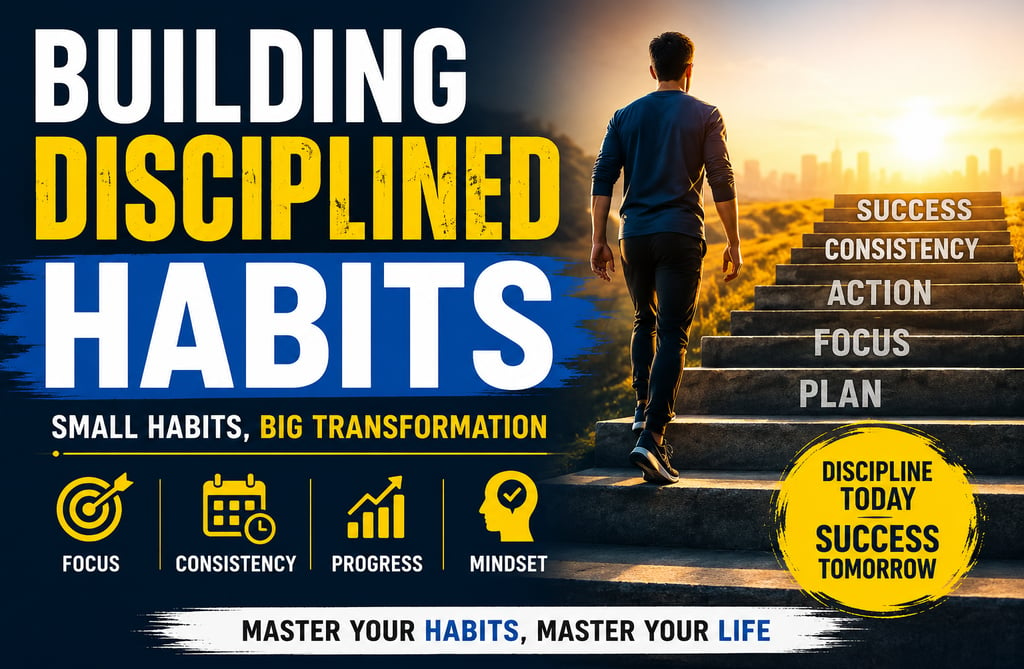
Building Disciplined Habits: The Key to Long-Term Success and Personal Transformation
Introduction: Why Disciplined Habits Matter
Building disciplined habits is one of the most powerful ways to change your life. Success in any area—whether health, career, relationships, or spiritual growth—is not the result of one-time motivation but the outcome of consistent daily actions. Discipline turns ordinary routines into extraordinary results.
Many people struggle not because they lack ability, but because they lack consistency. Motivation may start a journey, but discipline sustains it. When you build disciplined habits, you remove the need for constant decision-making and rely instead on structured actions that lead to growth.
In this article, we will explore what disciplined habits are, why they matter, and how you can build them step by step using practical and proven strategies.
What Are Disciplined Habits?
Disciplined habits are repeated actions performed consistently, even when motivation is low or distractions are present. These habits are intentional, structured, and aligned with long-term goals.
For example:
Waking up early every morning
Reading for 20–30 minutes daily
Exercising regularly
Praying or meditating consistently
Managing time effectively
Unlike random actions, disciplined habits are built through repetition and commitment. Over time, they become automatic behaviors that shape your identity.
The Psychology Behind Habit Formation
Understanding how habits form is essential for building discipline. According to behavioral psychology, habits follow a loop:
1. Cue (Trigger)
This is the signal that starts the habit, such as waking up, feeling stressed, or finishing a task.
2. Routine (Behavior)
This is the action you take, such as exercising, checking your phone, or studying.
3. Reward
This is the benefit or satisfaction you receive, which reinforces the habit.
When this loop repeats consistently, your brain automates the behavior to save energy. This is why both good and bad habits become difficult to break.
Why Most People Fail to Build Discipline
Many people start strong but fail to maintain consistency. The main reasons include:
1. Relying Only on Motivation
Motivation is temporary. When it fades, habits collapse.
2. Unrealistic Goals
Trying to change everything at once leads to burnout.
3. Lack of Structure
Without a clear routine, it becomes easy to drift off track.
4. Poor Environment
A distracting environment weakens focus and discipline.
5. No Accountability
Without tracking or responsibility, progress slows down.
Understanding these barriers helps you build a stronger system for discipline.
Step-by-Step Guide to Building Disciplined Habits
Step 1: Start Small but Consistent
One of the biggest mistakes is trying to change too much too quickly. Instead, start small. For example, if you want to read daily, begin with just 5–10 minutes.
Small habits are easier to maintain and gradually grow into stronger routines.
Step 2: Focus on One Habit at a Time
Multitasking habit formation often leads to failure. Choose one habit and master it before adding another.
For example:
First build a morning routine
Then add exercise
Then focus on learning or reading
Step 3: Create a Fixed Routine
Consistency comes from structure. Set specific times for your habits.
Example:
6:00 AM – Wake up
6:15 AM – Exercise
7:00 AM – Reading or learning
When habits are scheduled, they become part of your lifestyle.
Step 4: Remove Distractions
Your environment plays a major role in discipline. Remove temptations that weaken your focus.
Keep your phone away during work
Clean your study or work space
Limit social media usage
A focused environment builds a focused mind.
Step 5: Use the 2-Minute Rule
If a habit feels difficult, reduce it to just 2 minutes. This makes it easier to start.
For example:
Instead of “work out for 1 hour,” start with “do 5 push-ups”
Instead of “read 30 pages,” start with “read 2 pages”
Starting is the most important step.
Step 6: Track Your Progress
Tracking creates accountability. Use a journal, app, or checklist to monitor daily habits.
Seeing progress motivates you to continue.
Step 7: Build Identity-Based Habits
Instead of focusing only on goals, focus on identity.
Ask yourself:
“Who do I want to become?”
For example:
“I am a disciplined person”
“I am someone who values health”
When your identity changes, your habits naturally follow.
Step 8: Stay Consistent, Not Perfect
Perfection kills progress. Missing one day is not failure—quitting is.
Even small efforts daily are more powerful than occasional perfection.
The Role of Mindset in Discipline
Your mindset determines your success in building habits. A disciplined mindset includes:
Patience for slow progress
Commitment to long-term goals
Acceptance of discomfort
Willingness to grow through challenges
Discipline is not about restriction; it is about freedom through structure.
Benefits of Building Disciplined Habits
When you develop discipline, your life changes in powerful ways:
1. Increased Productivity
You accomplish more in less time.
2. Better Mental Clarity
Structure reduces stress and confusion.
3. Stronger Confidence
Consistency builds self-trust.
4. Improved Health
Healthy routines improve physical and mental well-being.
5. Long-Term Success
Small daily actions create big results over time.
Common Mistakes to Avoid
To maintain discipline, avoid these mistakes:
Trying to change everything at once
Giving up after small failures
Comparing your progress with others
Ignoring rest and balance
Relying only on motivation
Final Thoughts
Building disciplined habits is not an overnight process. It is a journey of consistency, patience, and self-control. Every small action you take today shapes your future identity.
Remember, discipline is not about being perfect—it is about being consistent. Start small, stay focused, and commit to daily improvement. Over time, these small habits will transform your life in powerful and lasting ways.
Conclusion
If you want to achieve success in any area of life, focus on building disciplined habits. They are the foundation of personal growth and long-term achievement. With the right mindset, structure, and consistency, you can transform your daily routines into powerful systems of success.